
Co-invention. Partnership.
Delivery.
Define and size the work together — begin with a bounded first stage that produces a prototype or draft requirements and reduces uncertainty.
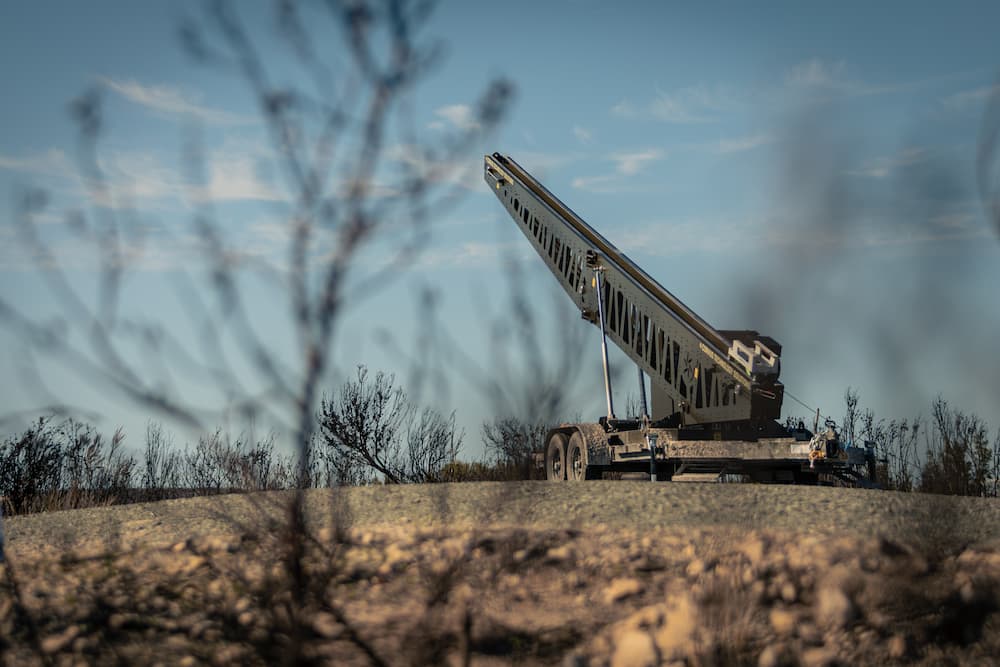
Co-invention
Engineer what doesn’t exist off-the-shelf
New opportunities
Co-invention work almost always starts with an uncertainty problem: the work needs to be sized at the same time as it is being defined. At the outset, neither party has a complete view of the solution, the effort involved, or the trade-offs that will matter most.
Developing a detailed and stable set of requirements takes time and effort. This often has to happen before the customer and ANCA Motion have worked together, and before there is enough shared context to make all assumptions explicit. As a result, early-stage definition is inherently imperfect.
The first stage of a co-invention engagement is therefore critical. The intent is not to define everything up front, but to deliberately take on a bounded piece of work — enough to reach a first prototype, a proof point, or a draft set of requirements that is grounded in practical evidence rather than assumption.
Through this initial phase, both sides learn. The customer gains a concrete understanding of what ANCA Motion can deliver and how we work. In parallel, ANCA Motion develops a clearer, more practical understanding of the customer’s problem, constraints, and priorities.
Our capabilities
ANCA Motion brings integrated capability across control, electronics, firmware, software, and system-level integration. This allows early concepts to be explored with realistic assumptions about performance, determinism, reliability, safety, and lifecycle behaviour, rather than optimistic or theoretical expectations.
Because these capabilities sit together, early trade-offs can be assessed quickly. Decisions around architecture, interfaces, performance margins, and component choices are made with direct input from those who will later be responsible for implementation, validation, and support. This reduces the risk of early decisions creating downstream rework.
Prototyping is used deliberately as a learning tool. Early builds are not treated as disposable demonstrations, but as mechanisms to expose unknowns, test assumptions, and inform requirement definition. Where possible, prototype work is aligned to what will later matter for manufacturability, test, and long-term support.
This integrated capability allows the early stage to remain focused and time-bounded. Instead of expanding into open-ended definition activity, effort is concentrated on the areas of highest uncertainty and risk, producing concrete outputs that can be used to make better decisions about next steps.
Longer term
Once a shared understanding has been established, subsequent phases can be defined and sized with significantly greater confidence. Requirements are clearer, interfaces are better understood, and the range of viable solutions has been narrowed through evidence rather than assumption.
This leads to more stable planning and execution. Technical risk is reduced earlier, effort estimates become more reliable, and changes are driven by new information rather than late discovery. Both parties have a clearer view of ownership, responsibilities, and decision boundaries.
Over the longer term, this approach supports a cleaner transition from prototype to production. Solutions are easier to manufacture, test, and support because those considerations were present from the beginning. The result is delivery that scales without losing the original technical intent or performance characteristics.